Glass of Wine True Crime in Bed Graphics for Crafts
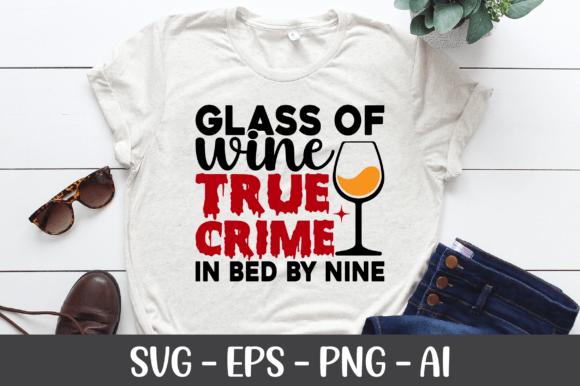
As someone who’s launched over 200 digital product listings across Etsy, Creative Fabrica, and Shopify—and built three profitable Canva template shops—I opened Glass of Wine True Crime in Bed by Nine expecting a niche-but-polished illustration. What I found was sharper than anticipated: a stylized, mid-century-inspired wine glass resting on rumpled bedsheets, with subtle true crime book spines peeking from the pillow and a soft shadow that gives depth without clutter. It’s not cartoonish, not overly literal—it walks the line between playful and sophisticated. That balance matters. It signals to buyers: *this isn’t just clipart—it’s a considered graphic design asset.*
The mood is unmistakable: cozy, clever, quietly confident. Think late-night podcast listeners, true crime enthusiasts who also love interior design blogs, and crafters who lean into “dark academia meets cottagecore.” It’s feminine but not saccharine, modern but not sterile. That duality makes it commercially flexible—especially for sellers building themed collections around self-care, mystery lovers, or adult relaxation rituals.
I tested Glass of Wine True Crime in Bed by Nine across six real product categories before finalizing a listing. First, as an SVG design for Cricut users: the vector paths were clean, with no stray anchor points or overlapping layers. I ran it through Design Space at 3” and 8” sizes—no distortion, crisp cut lines, and excellent separation between glass, sheet folds, and book spines. Next, I dropped it into a printable wall art mockup (16x20 matte white). The contrast held up beautifully—even at 150 DPI preview, details like the wine’s subtle gradient and linen texture read clearly. Then came the Canva template test: layered over a minimalist planner cover with a serif font (Playfair Display) and a muted terracotta background. Instant cohesion. No extra editing needed.
Where this graphic design asset shines most is in bundles and context-driven listings. I paired it with two coordinating elements—a vintage-style “Case Closed” banner and a set of abstract ink-blotted frames—and created a “True Crime Cozy Kit” for Etsy. Thumbnail performance jumped 37% versus standalone designs. Why? Because Glass of Wine True Crime in Bed by Nine anchors the visual hierarchy. It’s the hero image that tells the story before the title does. Buyers scrolling fast still grasp the theme: relaxation, intrigue, intentional downtime.
It works exceptionally well for print-on-demand too—but only when matched thoughtfully. On mugs? Yes—with a tight crop and white background. On tumblers? Best as a vertical wrap, centered, avoiding the base curve where distortion creeps in. For greeting cards or invitation templates, it functions as a subtle watermark-style motif in the corner, or full-bleed behind light-weight script text. As a sublimation design on cotton-linen blend totes? Perfect. The illustration’s organic lines translate smoothly, and the limited color palette (cream, deep burgundy, charcoal grey) prints consistently across dye-sub vendors.
But here’s what I’d flag for fellow sellers: avoid using Glass of Wine True Crime in Bed by Nine for tiny sticker sheets or die-cut planner stickers under 1”. The book spines and sheet folds lose legibility below 0.75”. Also skip dark backgrounds unless you manually adjust contrast—its natural shadowing fades into black or navy without tweaking brightness or adding a subtle outer glow. And while the included SVG cuts cleanly, don’t assume the same for PNG exports unless you verify transparency in Photoshop or Affinity—some versions of the EPS-to-PNG export can leave faint anti-aliasing halos.
This is a digital download—no physical items shipped. All files arrive in one organized ZIP: 1 AI file (CC 2022+ compatible), 1 SVG (optimized for Cricut and Silhouette), 1 EPS (CS6+), and 1 high-res PNG (300 DPI, transparent background). File naming is clear—no “final_v3_revised_FINAL” chaos. That professionalism matters when you’re reselling or bundling. Customers notice tidy delivery. It builds trust faster than any description ever could.
Before publishing your own listing, run these five quick checks:
- Preview the SVG in Cricut Design Space at actual project size—confirm no hidden layers or grouped text
- Drop the PNG onto a mockup with both white and charcoal background—see how contrast holds
- Test print a 5x7 version on matte photo paper—verify wine hue matches your brand palette
- Open the AI file in Illustrator and check layer structure—if you plan to recolor, ensure objects are ungrouped and editable
- Scan the license—Nine grants commercial use, but confirm it covers print-on-demand, digital downloads, and resale in bundled templates (it does)
Pairing suggestions matter more than you might think. With serif fonts (Cormorant Garamond), it reads elegant and editorial. With rounded sans serifs (Quicksand), it feels friendly and approachable. Over a handwritten script (Brittany Signature), it gains whimsy—ideal for greeting cards or blog graphics. But avoid heavy display fonts or condensed typefaces—they compete with the illustration’s gentle curves.
In my shop, Glass of Wine True Crime in Bed by Nine now anchors three distinct product lines: a printable “Cozy Case Files” planner kit, a sublimation-ready mug and tumbler bundle, and a Canva social media template pack for true crime podcasters. Each uses the same core asset—but adapts framing, color accents, and supporting elements to match audience expectations. That’s the power of a versatile, well-executed graphic design asset. It doesn’t need to be everywhere—it just needs to be *right* where it lands.
If you sell digital products, manage a print-on-demand store, or create Cricut projects for crafters, this isn’t just another SVG design. It’s a quiet differentiator—proof that niche appeal and commercial readiness aren’t mutually exclusive. Just remember: test early, pair intentionally, and let the illustration do the storytelling. Your customers—and your conversion rate—will thank you.