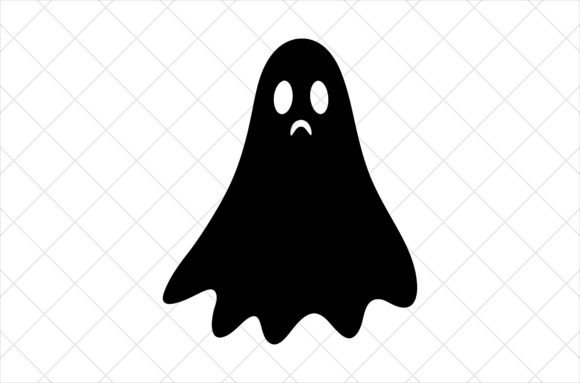
Halloween Ghost Silhouette, Ghost Vector
A Clean, Friendly Haunting—Not Too Spooky, Just Right
First glance at Halloween Ghost Silhouette, Ghost Vector tells me this isn’t a shrieking poltergeist—it’s a gentle, retro-leaning specter. Think mid-century Halloween postcards: soft curves, no sharp edges, a subtle nod to vintage charm without leaning into kitsch. The silhouette is bold enough to read at a glance, but not so heavy that it overwhelms delicate fabrics or small hoop sizes. It feels like the kind of ghost you’d embroider on a baby onesie for a “Boo-tiful Baby” gift—or stitch onto a linen tea towel for a boutique kitchen line. That balance—playful but polished—is rare in holiday graphics, and it’s why this design stands out in a sea of jagged bats and grinning pumpkins.
Where It Shines: Real Projects, Real Stitches
I tested Halloween Ghost Silhouette, Ghost Vector as the centerpiece for a custom embroidered cotton tote bag—intended for a local craft fair booth. On medium-weight canvas, with a light tear-away stabilizer and 40-weight rayon thread, the outline held beautifully. The clean vector edges translated directly into crisp satin-stitched borders, and the open negative space inside the ghost meant minimal fill stitch density—no puckering, no thread buildup. That’s huge for small business owners stitching dozens of units: less trimming, fewer re-hoops, smoother production flow.
It also worked surprisingly well on a relaxed-fit sweatshirt. The ghost’s generous proportions and smooth contours avoided the “crowded lettering” trap many Halloween designs fall into—no awkward stretching across seams or distortion over shoulder seams. For Etsy sellers offering personalized holiday apparel, this means consistent mockups and fewer customer questions about placement or sizing.
As an appliqué design? Equally solid. I layered it over a navy twill patch using a simple zigzag satin border—clean, fast, and shop-ready. And for nursery decor? Paired with soft gray thread on ivory linen pillow covers, it reads sweet—not scary—a quiet nod to the season that fits year-round styling.
Where to Pause (and Plan Ahead)
This isn’t a one-size-fits-all embroidery file. Its strength lies in simplicity—but that also means it needs thoughtful context. On highly textured fabrics like terry cloth or bouclé, the clean lines can blur slightly unless you add a touch more underlay or switch to a denser stabilizer combo. On thin or stretchy knits (think lightweight tees), test stitch first: the open interior shape relies on stable fabric tension to keep its form.
Dark fabrics demand attention too. Since the design is a silhouette, contrast hinges entirely on thread choice. A charcoal ghost on black fabric disappears—so always preview your thread colors against both light and dark backgrounds before digitizing or stitching. And while it scales well down to ~3 inches wide, avoid shrinking it below 2 inches for machine embroidery: the curve at the bottom edge starts losing definition, and tiny details vanish in satin stitch.
Caps and curved surfaces are doable—but only if you’re using a cap frame and adjusting hooping technique. The ghost’s rounded base sits comfortably on a front-panel cap, but avoid placing it near the bill seam where distortion creeps in.
What It Adds to Your Finished Product—Beyond the Stitch
Halloween Ghost Silhouette, Ghost Vector quietly elevates perceived value. It doesn’t shout “Halloween!”—it whispers “thoughtfully made.” Customers notice that. On handmade products, that subtlety builds trust: it signals care in curation, not just speed-to-market. For craft businesses building seasonal collections, it pairs effortlessly with neutral palettes—cream, slate, rust—making it easy to maintain brand consistency across holiday and non-holiday items.
It also performs well in digital spaces. As a digital embroidery file, its clean vector foundation makes it ideal for printable mockups—no pixelation when scaled for Etsy listings or Instagram previews. And because it’s delivered in multiple formats (SVG, PNG, EPS, DXF), it bridges embroidery and other crafts: think laser-cut wood ornaments, vinyl decals for mugs, or even hand-drawn tracing for cross-stitch patterns.
Practical Notes from the Hoop
- Always test first: Run a sample on scrap fabric matching your final project’s weight and stretch.
- Check thread color contrast: Especially on dark or busy prints—what reads clearly on screen may fade in stitch.
- Review stitch density: Low-fill areas are a strength here, but confirm your digitized version doesn’t overcompensate with unnecessary underlay.
- Confirm hoop size compatibility: While the shape is forgiving, verify your intended hoop clears the full width—especially for larger versions.
- Inspect corners and curves: This design has no tight angles, but still check how the bottom curve stitches on your machine—some older models stutter on smooth, slow arcs.
- Mock it up in black and white: Helps spot unintended visual weight imbalances before stitching.
- Use proper stabilizer: Light to medium cut-away works best for apparel; tear-away is fine for stable home-decor fabrics.
- Verify licensing: As a digital embroidery file sold for Crafts and Graphics use, confirm whether commercial embroidery rights are included—especially if you plan to sell finished embroidered patches or apparel.
Final Thought: A Design That Serves the Maker
Halloween Ghost Silhouette, Ghost Vector isn’t flashy—but it’s reliable. It doesn’t ask for special treatment, yet rewards attention to detail. Whether you’re stitching 5 personalized baby onesies or 50 boutique tote bags, it delivers clarity, charm, and quiet professionalism. In a market flooded with loud, complex Halloween graphics, this one earns its place in your embroidery project queue—not because it’s trendy, but because it’s truly usable.