No Great Success is Possible SVG
A Designer’s First Look: Clean, Earnest, and Quietly Bold
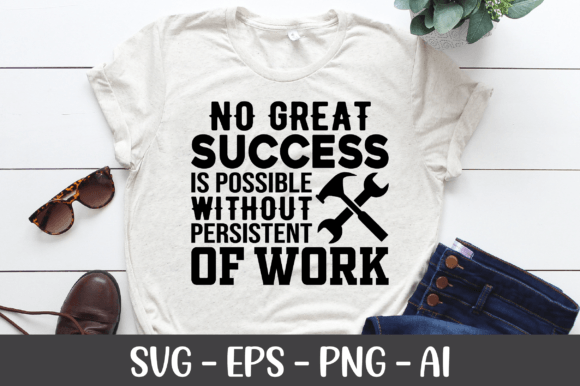
When I opened No Great Success is Possible SVG, what struck me wasn’t flash or flourish—it was clarity. The phrase sits centered in a clean, slightly condensed sans-serif, with subtle spacing that breathes without feeling sparse. There’s no decorative script, no ornate border, no forced whimsy—just grounded typography and quiet confidence. It reads like something you’d stitch on a linen tea towel for a teacher’s gift, or embroider onto the chest of a heavyweight organic cotton sweatshirt for a small-batch boutique launch. That’s its strength: it doesn’t shout. It resonates.
Real-World Test: A Custom Embroidered Tote for a Local Bookstore
Last week, I used No Great Success is Possible SVG to create a limited-run tote bag for a neighborhood indie bookstore launching their “Readers Who Persist” campaign. We chose natural canvas—medium weight, lightly textured—and stitched the design at 4.2" wide across the front panel. No fill-heavy motifs, no layered appliqué—just clean satin-stitched outlines and well-proportioned letterforms. The result? Crisp, legible, and deeply human. Customers didn’t just see text—they paused. Smiled. Asked where it came from. That kind of quiet engagement is rare in craft-driven branding—and it starts with a design that trusts the message more than the decoration.
Where This Design Shines (and Where It Asks for Thought)
No Great Success is Possible SVG works beautifully for:
- Custom apparel—especially sweatshirts, crewnecks, and structured totes where bold, centered text reads cleanly at 3–5" wide;
- Personalized gifts—think baby embroidery on a muslin swaddle (use light stabilizer), or a minimalist pillow cover for a grad’s first apartment;
- Boutique merchandise—it pairs effortlessly with neutral palettes and handmade presentation, elevating a simple product into something intentional;
- Holiday or milestone embroidery—a framed hoop with this phrase makes a grounded, non-cliché graduation or retirement gift;
- Digital embroidery file use—its vector-native structure (AI, EPS, SVG) means smooth scaling without pixelation, ideal for printable mockups or Etsy listing previews.
Design Notes Every Embroiderer Should Consider
This isn’t a “drop-in-and-stitch” design if your project pushes technical limits. Here’s what I watched closely—and what I’d advise you to check before committing:
- Small hoop sizes: At under 3", letter spacing tightens noticeably. Test stitch at your target size—even minor scaling can blur readability on dense fabrics.
- Textured or stretchy fabric: The clean lines rely on stability. Use cutaway stabilizer for knits or loosely woven linens; skip tear-away alone on terry cloth or fleece.
- Dark fabric backgrounds: The design has no built-in shadow or outline—so thread color contrast is critical. I tested black thread on navy twill and found it readable but low-contrast; switching to charcoal gray improved depth without losing subtlety.
- Curved surfaces (caps, curved patches): Avoid placing it across the crown seam. Center it on the front panel instead—letterforms hold shape better on flat or gently rounded planes.
- Frequent washing: Since it’s primarily satin and running stitch (no heavy fill areas), it holds up well—but always pre-wash fabric and test wash one sample piece before fulfilling orders.
What It Adds to Your Finished Product—Beyond the Stitch
Using No Great Success is Possible SVG isn’t just about transferring letters to fabric. It subtly shifts how people perceive your handmade product. On a kitchen towel? It feels like encouragement, not decor. On a baby onesie? It’s tender, not trite. On an Etsy listing? It signals intention—not just craft, but care in messaging. That builds trust. Buyers don’t just buy a tote or a cap; they buy alignment—with values, with effort, with authenticity. And because the design avoids trend-driven styling, it stays relevant across seasons, collections, and customer generations.
Practical Designer Checklist Before You Stitch
Before using No Great Success is Possible SVG in your next embroidery project—or listing it as part of your craft business assets—run through these steps:
- Test the design on scrap fabric matching your final product’s weight and texture;
- Review stitch density in your embroidery software—look for any overly tight corners or overlapping runs;
- Confirm hoop size compatibility (especially if digitizing from SVG—some converters add padding that eats into usable space);
- Inspect tiny details: the dot over the “i”, the terminal of the “l”, spacing between “No” and “Great”—they define professionalism;
- Mock it up in both black and white thread on light and dark fabric swatches;
- Verify stabilizer choice—lightweight cutaway for most medium-weight crafts, fusible for patches;
- Double-check licensing terms: this is a Graphics asset intended for Crafts use, but confirm whether commercial resale of finished embroidered items is permitted under the original license.
Final Thought: A Design That Earns Its Place
No Great Success is Possible SVG doesn’t try to be everything. It’s not playful, not vintage, not maximalist—and that’s precisely why it works so well in real embroidery practice. It’s a design that supports the maker, not competes with them. Whether you’re stitching for your own small shop, prepping holiday inventory, or creating a meaningful personalized gift, it gives weight to effort, dignity to process, and quiet power to persistence. In a world full of noise, that kind of clarity is rare—and worth every careful stitch.