The Dream Is Free the Hustle Is Sold
First Impressions: A Bold, Conversational Statement That Stitches Well
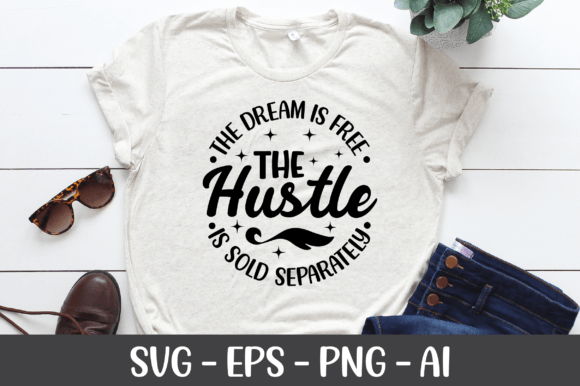
When I opened The Dream is Free the Hustle Is Sold for the first time, I didn’t just see text—I saw a mood. It’s clean, confident, and quietly rebellious—like something you’d stitch on a minimalist tote bag for a creative entrepreneur who refuses to romanticize burnout. The layout feels intentional: two balanced phrases separated by a subtle visual pause (no heavy divider, no decorative flourish), letting the message breathe. As a machine embroidery design, it leans into readability over ornamentation—no excessive flourishes, no fragile serifs, no overlapping letters that’ll ghost or blur in satin stitch. That’s a win. It’s clearly built for real-world stitching, not just screen appeal.
A Real Project Test: Embroidering It on a Linen-Cotton Tea Towel
Last week, I used The Dream is Free the Hustle Is Sold on a set of kitchen tea towels for a local boutique launch. Linen-cotton blend—medium weight, slightly textured, prone to puckering if stabilizer isn’t dialed in. I chose a 4×4 hoop, medium-weight cutaway stabilizer, and matte cotton thread in charcoal gray. The result? Crisp lettering, even spacing, and zero skipped stitches—even across the subtle curve where the towel folded over the hoop edge. No re-hooping. No tension panic. That tells me this embroidery file was digitized with practical fabric behavior in mind—not just vector perfection.
Where It Shines (and Where It Needs Thought)
The Dream is Free the Hustle Is Sold works exceptionally well for:
- Custom apparel: Sweatshirts, crewnecks, and relaxed-fit tees—especially on left-chest or back-center placements. The line weight holds up at 3–4 inches wide without thinning out.
- Tote bag design: Clean, legible from three feet away, and scales beautifully on canvas or heavy cotton duck.
- Embroidered patch: Its balanced negative space makes it ideal for iron-on or sew-on patches—no dense fill stitch clusters that stiffen the backing.
- Baby embroidery: On organic cotton onesies or burp cloths, it reads as warm and aspirational—not sarcastic—especially in soft sage or oatmeal thread.
- Holiday embroidery & personalized gifts: Think embroidered pillow covers for small business owners’ home offices, or monogrammed aprons for maker friends—it lands with sincerity, not irony.
But—and this matters—The Dream is Free the Hustle Is Sold needs thoughtful placement on:
- Stretchy fabric: Knits like jersey or ribbed cotton require excellent stabilization and possibly reduced stitch density (check your file’s settings before hooping).
- Curved surfaces: Caps or beanies may compress the spacing between “Free” and “Hustle”—test on scrap first, or consider slight letter tracking adjustments.
- Thin or sheer fabric: Lightweight rayon or voile can show stabilizer shadow; use tear-away + light cutaway combo and reduce underlay if needed.
- Dark fabric with light thread: While legible, fine details (like subtle inner curves in “e” or “o”) benefit from a satin stitch outline or slight stroke expansion—review in your embroidery software.
What It Does for Your Craft Business—Beyond the Stitch
This isn’t just a graphics download. As an Etsy seller and small shop product developer, I’ve watched how The Dream is Free the Hustle Is Sold shifts buyer perception. When stitched cleanly on a handmade apron or ceramic mug sleeve, it signals intention—not just decoration. Customers notice the spacing, the rhythm, the lack of visual clutter. That builds trust in your handmade product. It also pairs seamlessly with branding: use it alongside your logo on packaging tags, or layer it subtly in printable mockups for digital product previews. For creative entrepreneurs building a cohesive aesthetic, it functions as reliable design assets—not filler.
Designer Notes You’ll Actually Use
Before stitching The Dream is Free the Hustle Is Sold on your next project, do these five things:
- Test on scrap fabric—same type and weight as your final piece. Watch for thread breaks, pull-through, or distortion on seams or hems.
- Check thread color contrast in natural light. What reads bold on screen may fade on oatmeal linen or get lost on heather gray.
- Review stitch density in your embroidery software. If it’s dense, consider reducing fill stitch % by 5–10% for breathable fabrics like chambray or lightweight denim.
- Confirm hoop size compatibility. This design fits comfortably in 4×4 and 5×7 hoops—but verify your version includes scaled options if you’re working with smaller machines.
- Inspect small details at 200% zoom: Are inner corners sharp? Do “a,” “e,” and “o” retain shape? If not, a quick manual tweak in your digitizing software saves re-stitching later.
Final Thought: It’s Not Just Text—It’s a Vibe You Can Trust
I’ve passed on dozens of “inspirational quote” embroidery files because they look great on screen but stitch like scrambled code. The Dream is Free the Hustle Is Sold avoids that trap. It respects the craft: the physics of thread, the behavior of fabric, the expectations of customers who pay for handmade quality. Whether you’re embroidering a single custom sweatshirt or batch-producing boutique merchandise, this design delivers clarity, consistency, and quiet confidence. And in the Crafts and Graphics space—where authenticity and execution are everything—that’s rare. Use it intentionally, test it honestly, and let the message land—not as decoration, but as declaration.